
HOW IT WORKS
A structured path to an electric repower
Every boat, owner, and cruising plan is different. We begin by understanding how you use your boat, then move from a practical assessment through design, installation, commissioning, and ongoing service.
An electric repower is a significant project. This structured approach answers the important questions early, so you can decide whether it makes sense, what it involves, and what to expect before any work begins.
From first questions to confident operation
The work is organized into four clear phases, with decisions and deliverables at each stage.
Phase 01
Conversion Assessment
We begin with your boat, its propulsion arrangement, and the way you use it. We review normal motoring needs, charging access, available space, weight, and other practical constraints.
Outcome: A clear initial view of whether an electric repower is worth pursuing.
Phase 02
Preliminary Concept
If the vessel appears to be a good candidate, we develop a preliminary propulsion and energy concept. This considers drive arrangement, batteries, charging sources, integration, expected operating profile, and key tradeoffs.
Outcome: A practical concept for evaluating the system and its limitations.
Phase 03
Scope & Installation
After selecting a direction, we prepare a detailed proposal defining equipment, installation work, vessel modifications, schedule, and project costs. Once approved, we coordinate and carry out the installation.
Outcome: A defined scope and a professionally installed system.
Phase 04
Commissioning & Support
We test and commission the completed system, confirm operation on the water, and explain normal use, charging, and maintenance. We remain available for documentation, service, and ongoing support.
Outcome: A commissioned system with support after delivery.
Phase 01
__________
Conversion assessment
We begin by learning about your boat and the way you actually use it. We consider its hull and displacement, existing engine and drive arrangement, potential battery locations and their effect on trim, typical motoring hours, and charging opportunities—including shore power, solar, regeneration, and a generator where appropriate.
We also discuss your goals and practical constraints, such as budget, timing, and where the boat is kept. This early work identifies the questions that must be answered before a preliminary concept is developed.
WHAT YOU RECEIVE
An honest initial view of whether an electric repower suits your boat and use
A clear list of the information and measurements still needed
A recommendation on whether to proceed to a preliminary concept
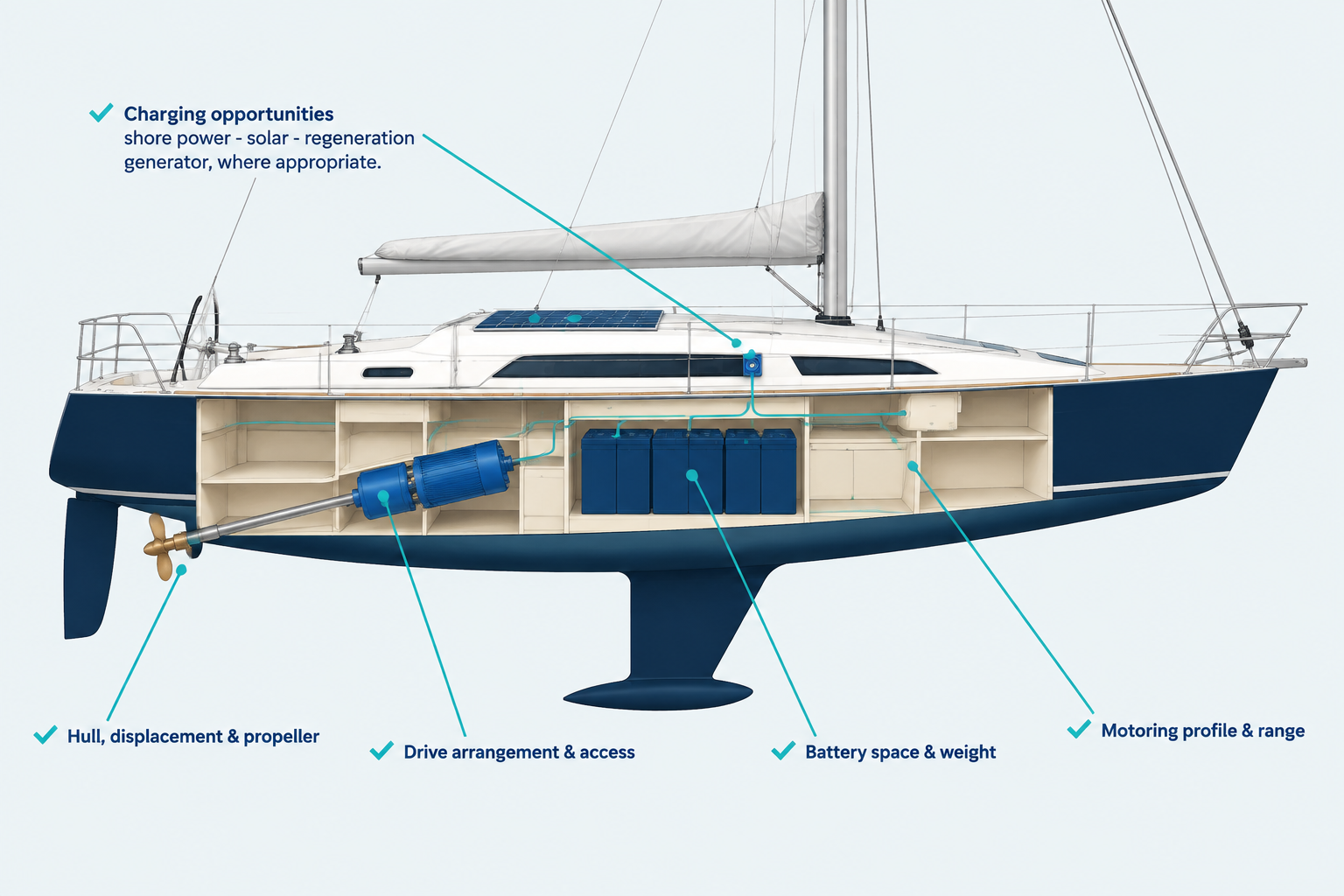
Sailboat cutaway diagram showing electric motor and shaft, battery space, solar, shore power, and optional generator, with callouts for propulsion, access, weight, range, and charging. Available charging sources depend on the vessel, its operating profile, and where it is kept.
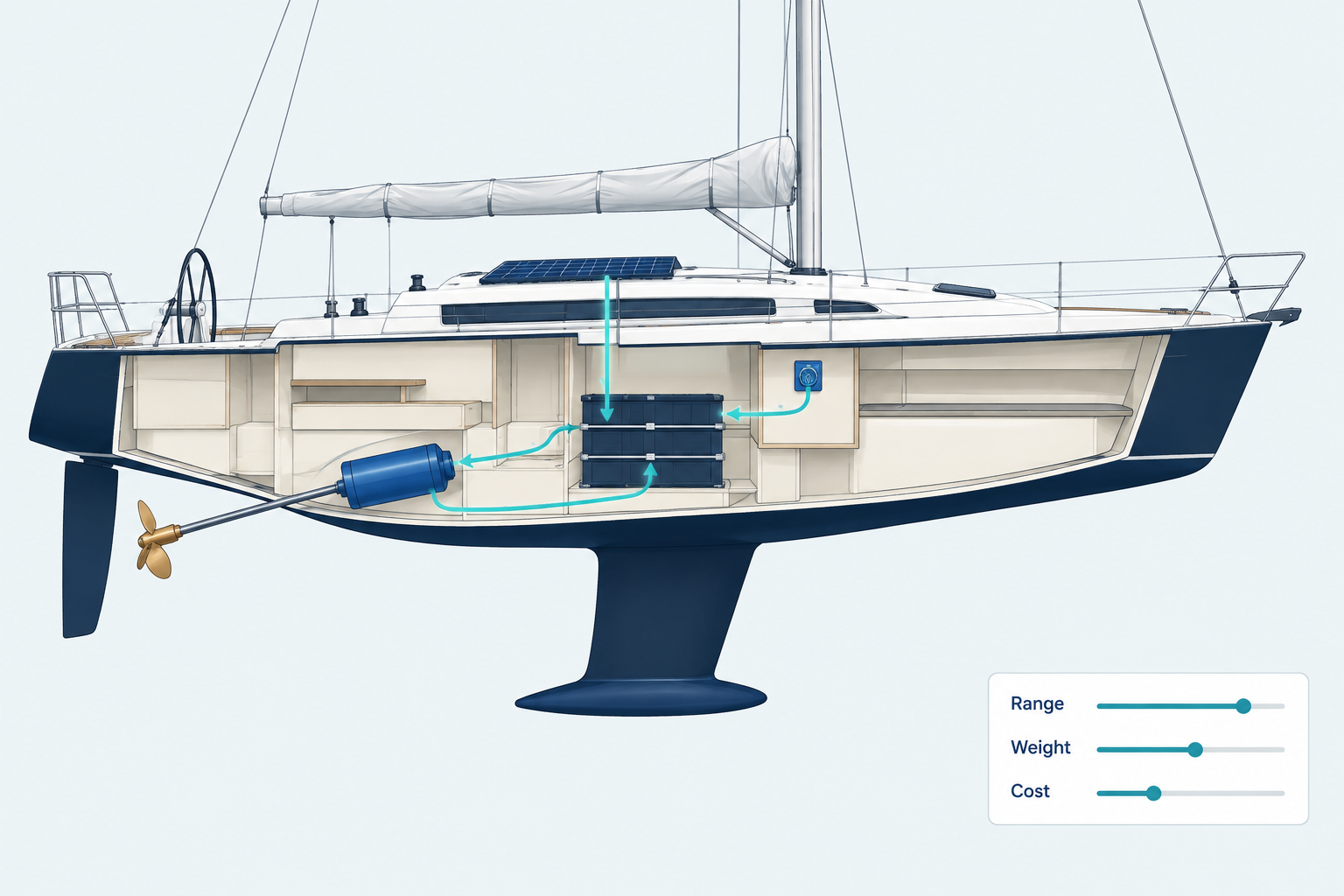
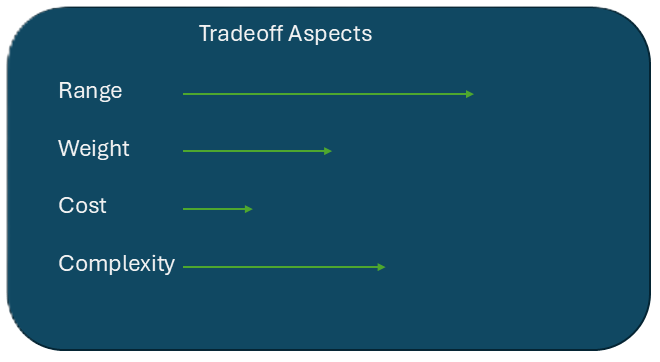
Final equipment selection and performance estimates follow detailed design, vessel measurements, and the approved project scope.
Phase 02
__________
Preliminary Concept
Based on the assessment, we develop a preliminary direction for the conversion: propulsion motor and drive arrangement, battery capacity and location, and a charging strategy that fits the way you use the boat. We explain the important tradeoffs clearly—especially among range, battery weight, cost, and system complexity—so you can decide whether to proceed before committing to detailed design and installation planning.
WHAT YOU RECEIVE
A preliminary propulsion, battery, and charging concept for your vessel
An indicative view of motoring capability under typical operating conditions
A clear explanation of the key tradeoffs and a preliminary budget range
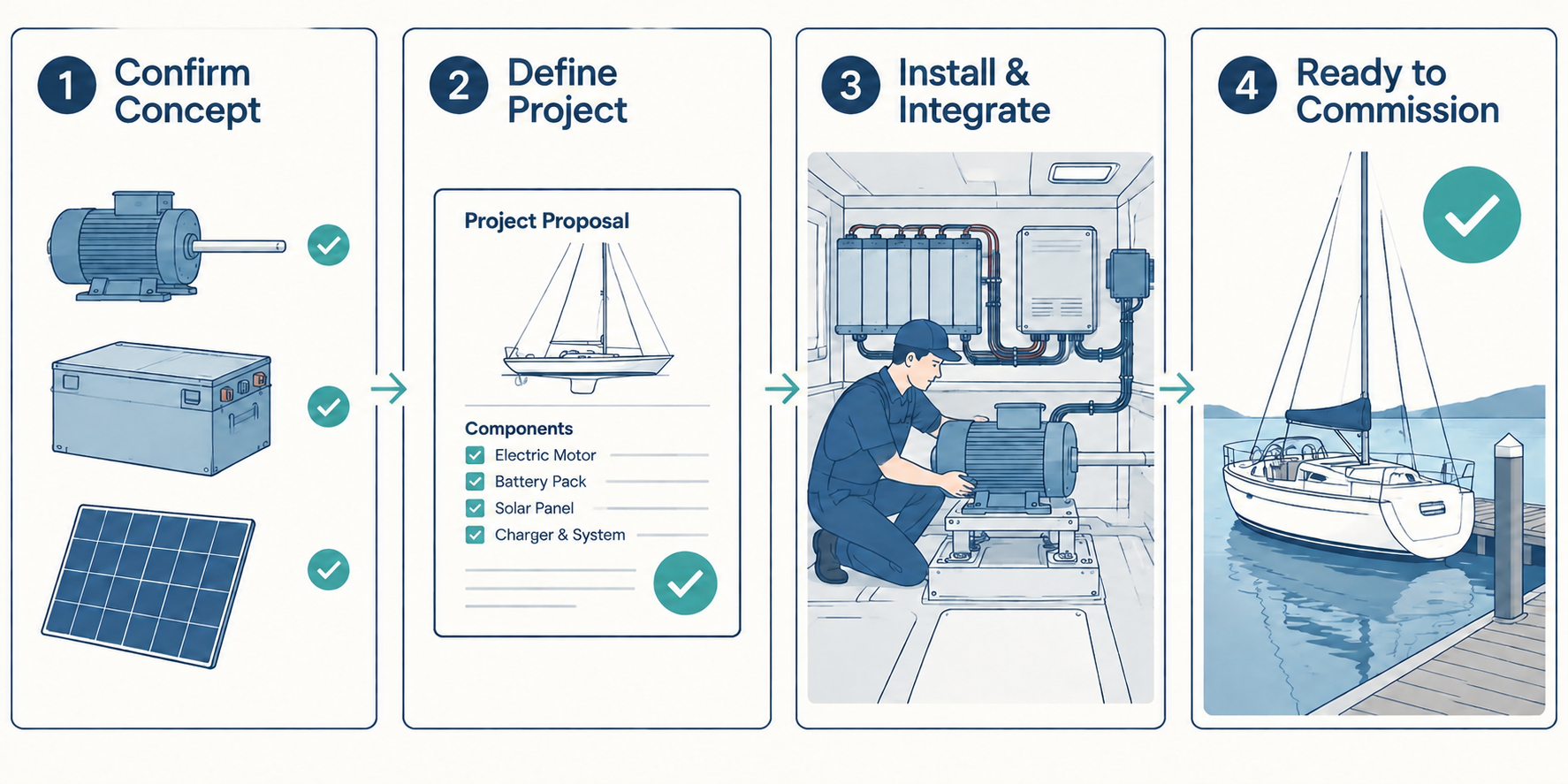
From approved concept to commissioning-ready system The project moves from confirmed equipment choices and a detailed proposal through coordinated installation and dockside verification, preparing the boat for on-water commissioning.
Phase 03
__________
Scope & Installation
Once you decide to proceed, we turn the preliminary concept into a detailed, buildable project. The proposal defines the selected propulsion equipment, battery system, charging components, controls, electrical integration, required vessel modifications, schedule assumptions, and project cost.
After the scope is approved, we coordinate and complete the installation. Propulsion, batteries, charging equipment, monitoring, controls, and supporting electrical systems are installed and integrated as one coordinated system. We manage the work around the vessel’s layout, access, serviceability, and safe operation—not simply the replacement of one engine with another.
WHAT YOU RECEIVE
A detailed proposal defining equipment, work scope, schedule, and project costA coordinated installation plan tailored to your vesselA complete, integrated propulsion and energy system ready for commissioning
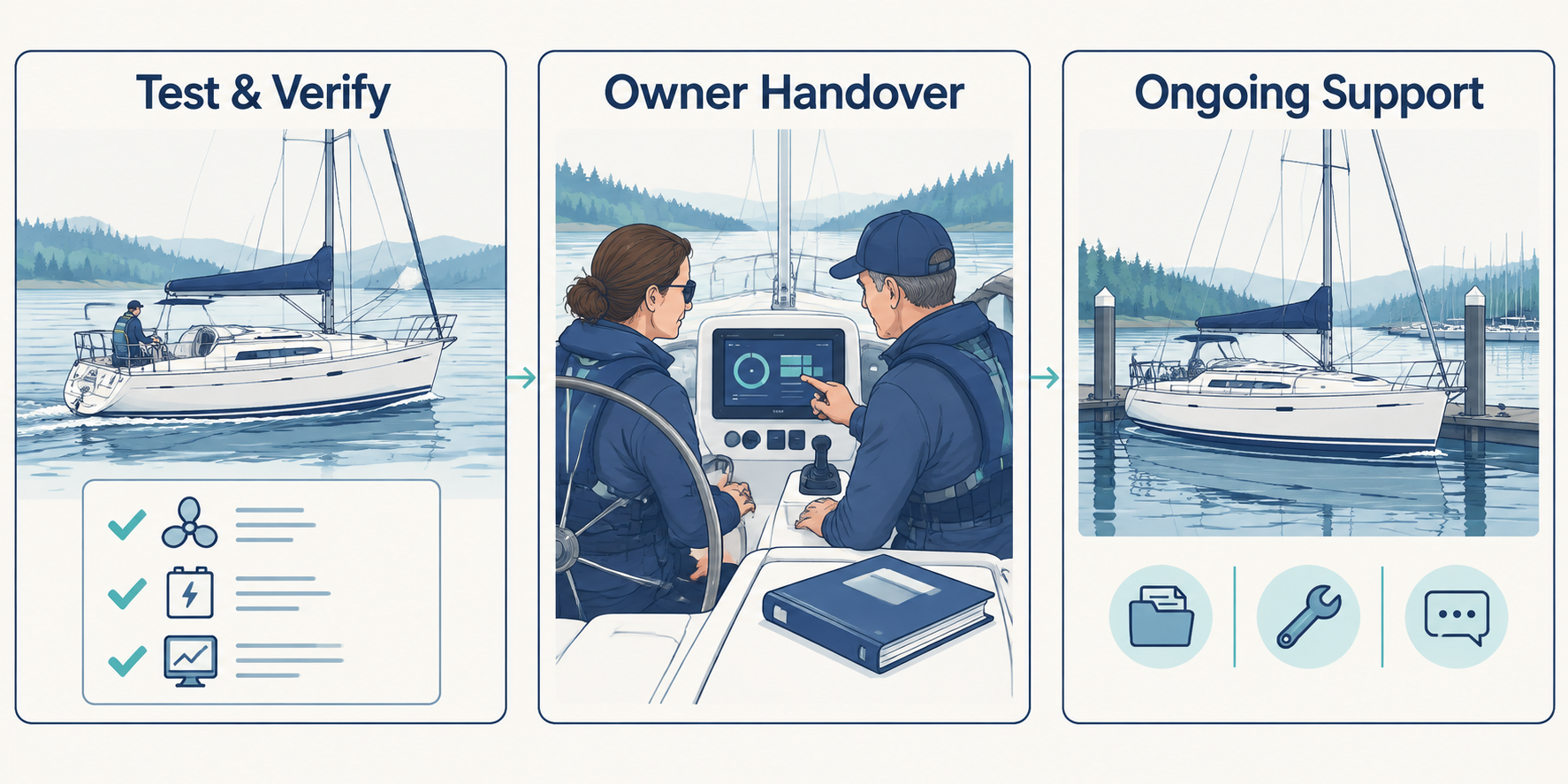
System verification, owner handover, and support after delivery.
Phase 04
__________
Commissioning & Support
Verified on the water. Supported beyond delivery.
Dockside checks and a sea trial confirm system operation, followed by owner orientation and handover of operating documentation. Ongoing service and support help you get the most from your electric repower.
WHAT YOU RECEIVE
A Commissioned system and test record - Completed system checks, charging and propulsion verification, sea-trial observations, and a record of any outstanding items and their resolution.
Owner orientation and system documentation - A walkthrough of controls, monitoring, charging, alarms, shutdown procedures, and routine care; equipment manuals and installation-specific drawings or records.
A clear service and support plan - Support contact details, recommended maintenance, applicable equipment warranty information, and an explanation of what follow-up service is included or separately charged.
Ready to explore an electric conversion?
Every boat and every cruising plan is different. Start with a conversation and an initial assessment of your vessel, propulsion needs, and charging options.